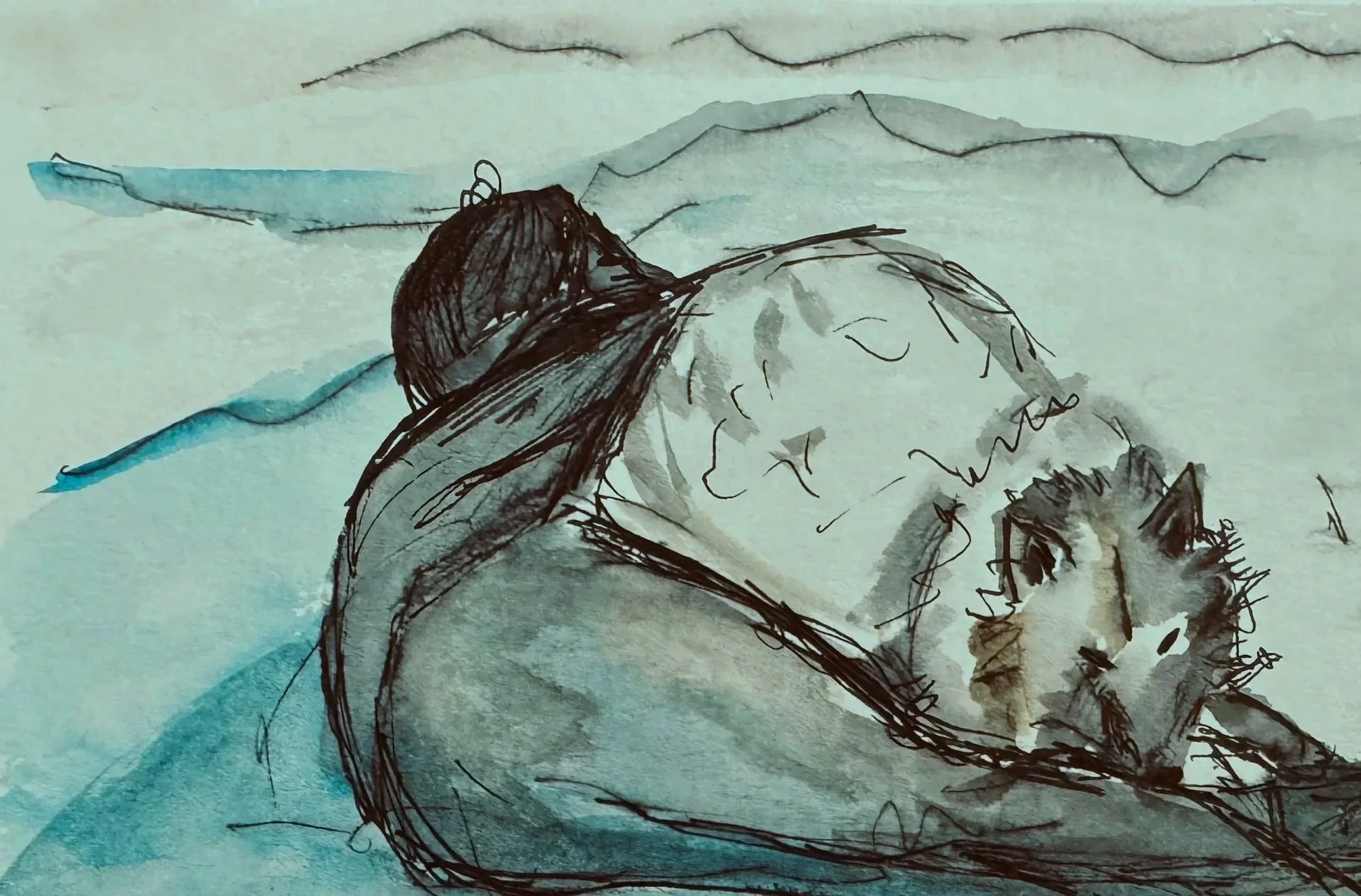
Knut protecting George.
Tucked in a drawer in my closet was an empty Leuchturm journal I had been saving to write a novella by hand. I yearned to see ink on a page, to write the old-fashioned way and feel the pen nib on the paper. It was supposed to be my reward for finishing the novel I’d been working on for years. Then the pandemic, George Floyd, the marches... my neighborhood turning into a ghosthood overnight.
The novel was a multi-voiced communal story set in Minneapolis, a city I had lived in both as a young adult and after grad school, but lived in no more. I was living in Chicago, walking the abandoned streets at night with my dog, Zelda, taking photos and videos of our shadows, of the glowing windows we passed, of the empty El rattling overhead. Cicadas. Sirens. Endless ambulances. Cars drag-racing down once busy streets. The city was both spooky and beautiful, and I felt locked away and simultaneously adrift like much of America. My misgivings about my novel project doubled and tripled, but I kept at it, writing about neighbors sharing space in a way that suddenly seemed quaint. Then one morning I pulled out the notebook, filled my pen and started to write. I heard a woman’s voice saying, “How far north can you go before you reach the beginning? I went north to find my son...” She turned out to be in complete denial, overly strategic—a director of risk and reputation, and she was not to be trusted. I couldn’t stop writing, or feeling like I was cheating on my almost finished novel. Claire Isono had a story to tell, about the time she went to the Arctic to save her son, a chef married to an architect of ice hotels.
I’d write a few pages each morning, stow the notebook away and get back to the revision. In the evenings, I’d rewatch episodes of Chef’s Table and then dream of halls of ice and long tables set with feasts. I invented dishes and didn’t worry if they were actually edible. I gave it the working title The Devouring because appetite was everywhere in the manuscript. When I was stuck, I’d let myself journal on the back side of the notepaper, and soon these short journals turned into a secondary Chicago story. I finished another draft of the first novel and half-heartedly shared it with my friend E and my partner. But it didn’t matter what they told me, I couldn’t stomach more revision. The book was dead—at least for now.
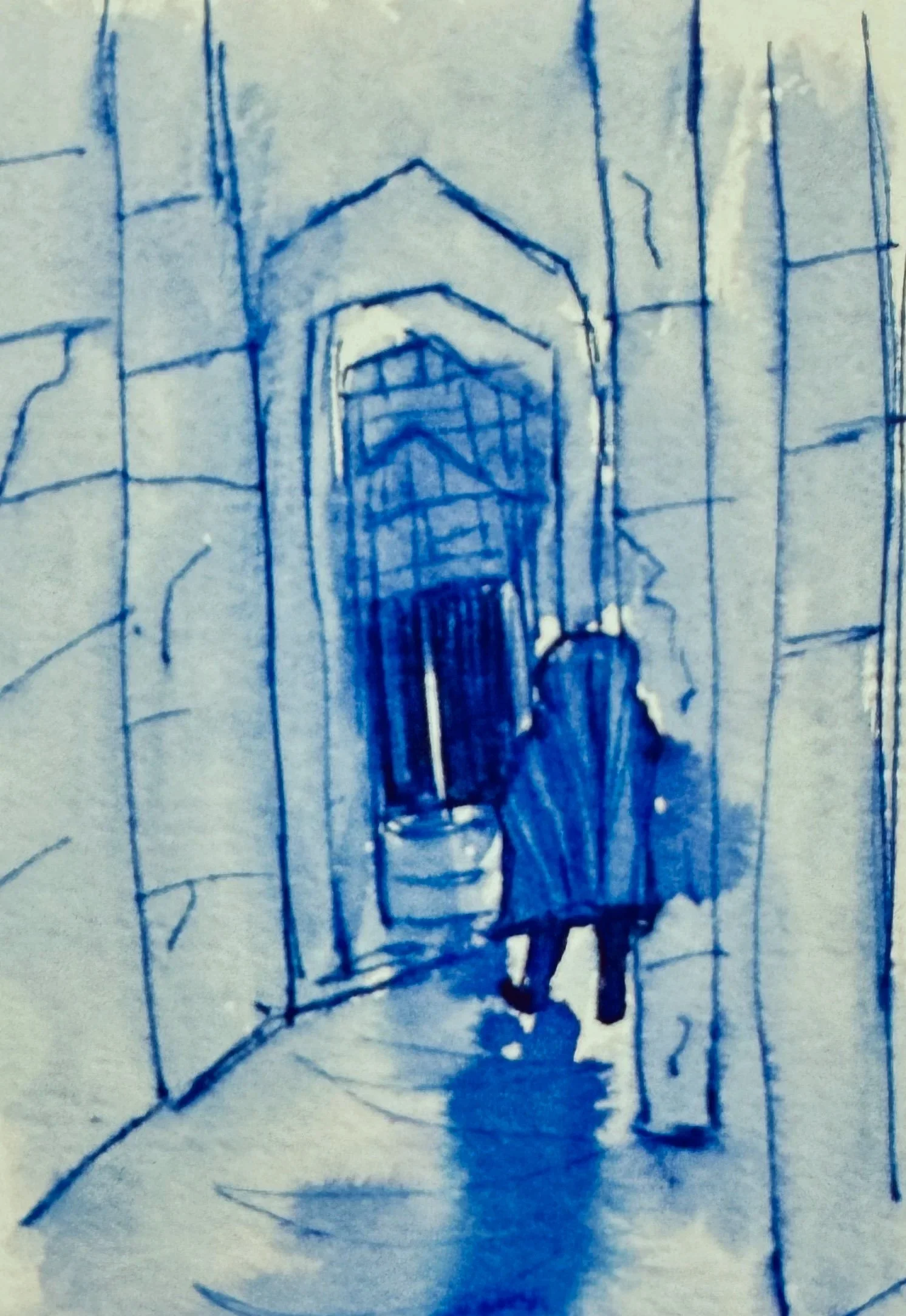
Sketch of the Hall of Mirrors at Sabina’s ice hotel.
Some months later I took out the handwritten draft of the new novel and typed it. I kept the working title, The Devouring. In the winter of 2022, I dragged my husband to Lapland for research and to stay in an ice hotel. It was so cold that week that Sweden shut down the trains north of Kiruna. Our train was full of vacationers from all over the world. We had a sleeping car and I took the top bunk and filmed the passing landscape. It was like watching an old European noir, the trees and sky in silver and black, dark smokestacks and shrill train whistles, lights flashing. Once we arrived the sky turned gray-gold and then later pink and blue. The Polar Nights. Different than in my imagination, but no less magical. The night we stayed in The Ice Hotel outside Kiruna it was -25. The frigid weather brought with it the Northern Lights, emerald green, flashing and streaking, changing so quickly I risked frostbite to stay outdoors and take photos.
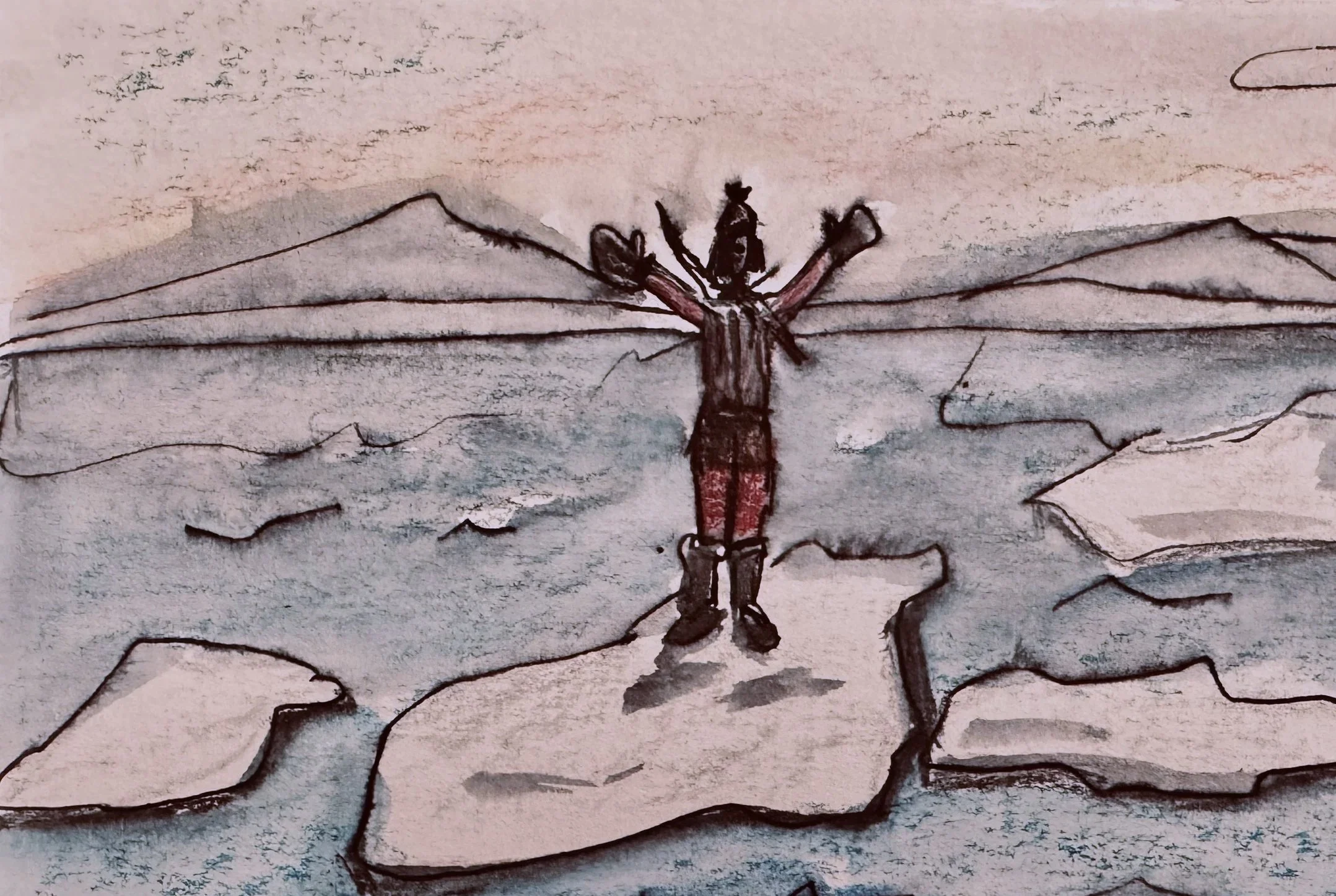
Claire Isono is adrift.
I promised myself that with this novel I would trust whatever came out of my pen. No early revision, I’d write as if I had forever and not censor myself. I finished a weird, wild draft and then put it away. For the next two years I didn’t understand why it had taken the turns it had or what I was going to do with it. And I worried there were too many stories about chefs coming out. Only this one isn’t really about a chef, it’s about a mother, and her relationships with the people she claims to love. I had wanted to turn the trope of the overly controlling mother/mother-in-law upside down. I had wanted to write a story full of humor, but there was more underneath… there always is. This past December, I was able to understand what it was that the book was naturally doing. A few weeks ago I finished a third draft and printed it out. The larger questions still unsettle me. Who is Claire Isono in the end? Do I believe her?